Bringing Science to Life: The 3D Shadow Box Experience
In the realm of educational decor and creative crafting, few projects manage to bridge the gap between academic inspiration and tangible art as effectively as the Science School Subject 3D Shadow Box. What begins as a simple aspiration to celebrate scientific discovery can easily evolve into a stunning laboratory ornament or a captivating night lamp. This project is not merely about cutting paper; it is about layering depth, light, and knowledge to create a visual narrative that honors the spirit of inquiry.
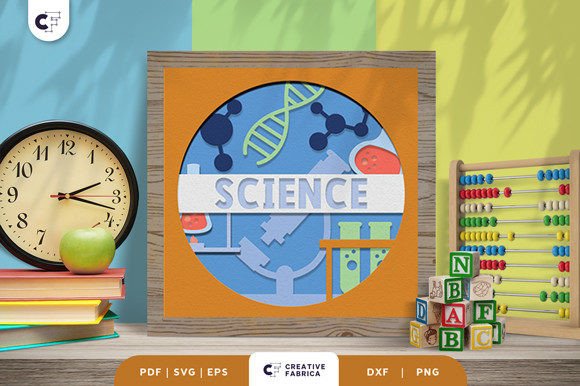
The concept revolves around a sophisticated layered paper cut design, where various elements of the science curriculum are represented through intricate vectors. At the heart of the composition lies a circular frame, serving as the focal point that draws the viewer's eye into the depths of the design. When assembled correctly, this structure transforms flat sheets of paper into a three-dimensional tableau, offering a unique way to display school subjects in a home, classroom, or professional office setting.
The Intersection of Light and Layering
One of the most compelling features of the Science School Subject 3D Shadow Box is its versatility regarding illumination. While the design stands beautifully as a traditional shadow box with natural lighting, the addition of LED strips elevates the project into a functional light box or a soothing night lamp. This dual functionality makes it an exceptional choice for diverse environments. In a child's bedroom, it serves as a gentle glow that inspires curiosity before sleep. In a professional laboratory or a teacher's lounge, it acts as a sophisticated piece of decor that highlights a passion for STEM (Science, Technology, Engineering, and Mathematics).
The interplay of light and shadow is critical here. By using a white background behind the layers, the LED strips can illuminate the simple yet profound design, casting shadows that accentuate the depth of each cut. This dramatic effect turns standard colored paper into a dynamic visual experience. Whether you choose warm white LEDs for a cozy atmosphere or cool white for a clinical, modern look, the lighting component allows creators to customize the mood of the piece entirely.
Compatibility and Digital Formats
For creators and business owners looking to produce these items, accessibility is key. The design is engineered to be compatible with the most common cutting machines found in crafting studios today. The primary file format provided is SVG (Scalable Vector Graphics), which is the industry standard for digital cutting. This ensures seamless integration with popular software ecosystems such as:
- Cricut Design Space: Ideal for hobbyists and small business owners using Cricut machines.
- Silhouette Cameo Studio Designer Edition: Perfect for users who require detailed control over cut settings.
- Scan N Cut: A versatile option for those who prefer scanning physical images alongside digital cuts.
- Glowforge: Excellent for laser cutting enthusiasts who want precision on various materials.
However, versatility extends beyond just SVG. To accommodate different workflows and software preferences, the Science School Subject 3D Shadow Box is available in a comprehensive suite of formats including PDF, EPS, PNG, and DXF. It is crucial for users to verify that their specific machine works with these provided file formats before beginning the project. This foresight prevents frustration and ensures a smooth production process, whether you are making a single unit for personal enjoyment or batching dozens for a school fundraiser.
Assembly: From Digital File to Physical Art
The journey from a digital download to a finished masterpiece involves a thoughtful assembly process. The design typically consists of 10 distinct layers, each contributing to the overall depth and complexity of the image. The standard size for this project is 20.32 × 20.32 cm (approximately 8x8 inches), making it a compact yet impactful piece that fits well on shelves, desks, or wall mounts.
To begin the assembly, creators have two primary options for cutting the materials: using a digital cutting machine or employing an art knife for hand-cutting. While machines offer speed and uniformity, hand-cutting provides a tactile connection to the craft and allows for adjustments on the fly. Regardless of the method chosen, the material selection plays a pivotal role in the final outcome.
- Paper Selection: The design is optimized for A4 size paper, the standard paper option available globally. Creators are encouraged to use colored paper to create dramatic effects. Contrasting colors between layers can highlight specific scientific instruments or symbols, while monochromatic schemes offer a sleek, modern aesthetic.
- Layering Medium: To achieve the necessary 3D effect, foam board or foam tape is used to separate the paper layers. This spacing is what allows light to travel through the box and cast the signature shadows that define this art form.
- Framing: Interestingly, the instructions suggest opting out of a standard shadow box frame in favor of a more custom approach. This allows the creator to build a housing that specifically accommodates the LED strips and the depth of the ten layers without being constrained by off-the-shelf dimensions.
Practical Considerations and Limitations
While the Science School Subject 3D Shadow Box is a rewarding project, it is important to manage expectations regarding the final product. As with any digital design purchase, the images seen online are often for preview purposes only. The final product color may vary slightly due to differences in monitor calibration, printer settings, and the specific brand of paper used. This variation is not a defect but rather a characteristic of handmade and semi-handmade crafts, adding a unique fingerprint to each piece.
Furthermore, the complexity of ten layers requires patience. For beginners, aligning the layers perfectly can be challenging. It is advisable to dry-fit the layers before applying adhesive to ensure that the vectors align correctly and the circular frame remains centered. Those using laser cutters like the Glowforge should pay close attention to kerf settings to ensure the pieces fit together snugly within the chosen frame.
Applications and Beneficiaries
Who benefits most from this type of project? The applications are vast. Educators can use these shadow boxes as teaching aids, dissecting the layers to explain different components of a scientific concept. Students might assemble them as part of a science fair project or a vocational training exercise in design and manufacturing. Interior designers specializing in educational spaces or medical offices will find these pieces to be excellent conversation starters that reinforce the theme of the room.
For small business owners in the crafting niche, this design offers a scalable product. Because the files are compatible with major cutting machines, a creator can produce multiple units efficiently. The ability to customize the paper colors means that each order can be tailored to a client's specific branding or room decor, adding significant value to the service offered.
Evaluating Suitability for Your Needs
Before diving into this project, consider your end goal. If you are looking for a quick, five-minute craft, this may not be the ideal choice due to the multi-layer assembly required. However, if you seek a meaningful project that results in a high-quality, professional-looking artifact, the Science School Subject 3D Shadow Box is an excellent candidate. It rewards attention to detail and offers a tangible return on investment in terms of time and effort.
The inclusion of various file formats ensures that whether you are a tech-savvy digital fabricator or a traditional paper artist, you have the tools necessary to succeed. The combination of scientific imagery with the artistic technique of papercutting creates a synergy that is both educational and aesthetically pleasing.
In conclusion, transforming a scientist's aspiration into a laboratory ornament is a process that blends creativity with precision. The Science School Subject 3D Shadow Box stands as a testament to what can be achieved when digital design meets physical craftsmanship. Whether illuminated by LEDs to serve as a night lamp or displayed in natural light as a decorative frame, it brings the wonder of science into the physical world, one layer at a time.