Bringing the Fairway Home with a Golf Bag 3D Light Box Paper Cut
There is a specific kind of quiet satisfaction that comes after a long day on the course, win or lose. It's that moment when you finally unpack your gear, maybe clean off a little mud from your clubs, and just reflect on the game. For many of us, golf isn't just a hobby; it's a lifestyle that bleeds into how we decorate our homes and offices. This is where the Golf Bag 3D Light Box Paper Cut transitions from a simple craft file to a meaningful piece of decor. It captures the essence of the game—the green grass, the towering trees, and the trusty bag waiting for the next round—in a tangible, layered format that flat photos simply can't match.
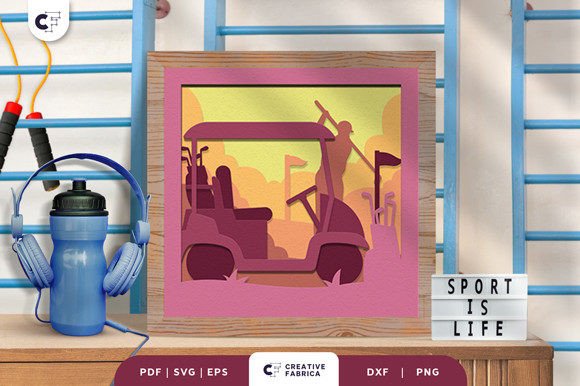
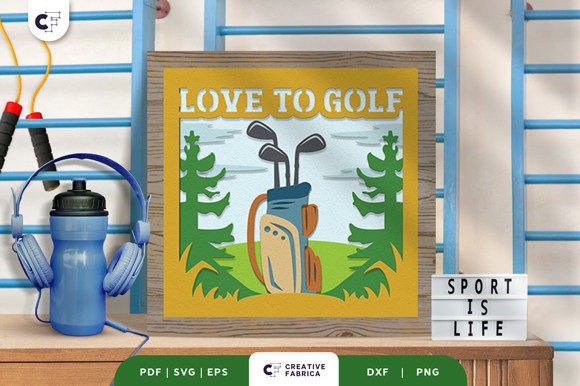
If you are a passionate golf player or know someone who lives and breathes the sport, this shadow box design deserves a prime spot in your collection. Unlike mass-produced plastic trophies or generic wall art, a paper cut shadow box offers depth, texture, and a handmade feel that resonates with the patience required to master a swing. The design typically features a classic style, presenting a refreshing golf field scene filled with lush grass layers and silhouette trees, with a golf club bag placed prominently in the middle. To complete the emotional connection, the quote 'Love To Golf' is often perched on top, serving as a daily reminder of why we drag ourselves out of bed at 6 AM on a Saturday.
Why Depth Matters in Sports Decor
The magic of this project lies in its dimensionality. When you look at a standard photograph of a golf course, it's static. But a Golf Bag 3D Light Box Paper Cut utilizes ten distinct layers to create a sense of immersion. By using 3D adhesive like foam double-sided tape between these layers, you create shadows and highlights that change depending on the angle of view and the lighting in the room. This technique mimics the actual depth of a fairway, making the viewer feel as though they are peering through a window onto the course rather than looking at a picture of one.
For adults aged 20 to 50 who are often curating spaces that reflect their personal identities, this level of detail is crucial. Whether it's for a home office, a man cave, or a cozy reading nook, the interplay of light and shadow adds a sophisticated touch. When backlit with LED lights, the translucent nature of high-quality cardstock (like the recommended 80 lb cover stock) allows the light to diffuse softly through the trees and grass, creating a warm, inviting glow that transforms the atmosphere of a room instantly.
Real-World Applications Beyond the Hobby Room
While the most obvious use case is personal home decor, the versatility of this design extends far beyond hanging it above your own sofa. Consider the scenario of a golf pro shop or a local country club lounge. These spaces often struggle to find artwork that feels authentic rather than corporate. A series of these light boxes, perhaps customized with different color schemes to match the club's branding, can add a boutique, artisanal feel to the waiting area. They signal to members that the establishment appreciates the artistry of the game, not just the business side of it.
Another powerful application is in the realm of gifting. Finding a unique gift for the golfer who has everything is notoriously difficult. They likely have enough balls, tees, and towels. However, a custom-made shadow box tells a story. Imagine creating this piece for a retirement party, using the specific colors of the retiree's favorite course or club. Or perhaps for a wedding gift for a couple who met on the driving range. The ability to tweak the layers—swapping out the "Love To Golf" text for names or dates—makes this a deeply personal gesture that shows you understand their passion.
Interior designers working on themed rooms also find immense value in these files. Because the design is delivered in versatile formats like SVG, PDF, EPS, PNG, and DXF, it can be scaled and adapted to fit various frame sizes, though the standard 20.32×20.32 cm size is perfect for shelf displays or gallery walls. The clean lines and recognizable silhouettes fit well within modern, farmhouse, or even industrial design aesthetics, provided the right paper textures are chosen.
Choosing the Right Materials for Professional Results
To bring this vision to life, the choice of materials is just as important as the cutting process itself. The difference between a amateur-looking craft and a professional-grade light box often comes down to the paper. The recommendation to use Encore Cardstock 80 lb cover 216 gsm is not arbitrary. This weight provides the structural integrity needed to hold the layers apart without sagging over time, yet it is thin enough to allow light to pass through effectively if you choose to illuminate it. Thinner papers might tear during the weeding process or fail to cast distinct shadows, while heavier board might block the light entirely and be too difficult for some cutting machines to handle cleanly.
When selecting your color palette, consider the environment where the piece will live. A high-contrast scheme—dark greens and blacks against a bright white background—creates a dramatic, modern look suitable for an office. Conversely, softer pastels and earth tones might blend more seamlessly into a living room setting. It is important to note that the final product color may vary slightly due to lighting sources and the specific batch of paper color, so ordering samples before committing to a large project is always a wise move.
The Creative Process: Tools and Techniques
Making this shadow box is an accessible project for anyone with a basic setup. You will need a cutting machine, such as a Cricut or Silhouette, which are standard tools in the crafting community. These machines read the digital files (SVG, DXF, etc.) and precisely cut the intricate details of the trees and the golf bag. The real craftsmanship comes during assembly. Applying the foam double-sided tape requires a steady hand to ensure the layers remain parallel; if the tape is bunched up or uneven, the illusion of depth can be compromised.
One practical observation for creators is to test-fit the layers before permanently adhering them. With ten layers involved, a slight misalignment in the bottom layers can compound, causing the top layer to sit crookedly. Taking the time to dry-fit the assembly ensures that the golf bag sits perfectly centered and the 'Love To Golf' quote is level. Additionally, if you plan to add LED lights, consider whether you want them hidden behind the frame for a subtle backlight or integrated within the layers for a glowing effect. Both methods work, but they require different planning regarding wire management and power sources.
Limitations and Considerations
While the results are stunning, it is honest to acknowledge the limitations. Paper is susceptible to humidity and direct sunlight. Placing a paper cut light box in a sun-drenched window or a damp basement could lead to warping or fading over time. For long-term display, UV-protective glass in the frame and placement in climate-controlled interiors are essential. Furthermore, dust can settle between the layers, which can be tricky to clean without disassembling the piece. Sealing the frame tightly during construction is the best preventative measure.
Despite these minor considerations, the Golf Bag 3D Light Box Paper Cut remains a standout project for blending technology with traditional crafting. It bridges the gap between digital design and physical art, offering a customizable solution for golf enthusiasts to celebrate their love for the game. Whether you are a seasoned crafter looking for your next weekend project or a designer seeking unique assets for a client, this template offers a robust foundation. The combination of precise digital cutting and the tactile warmth of paper creates a piece of art that feels both modern and timeless, perfectly capturing the spirit of the fairway in a compact, illuminated frame.