Creating a Sugar Skull 3D Light Box Paper Cut for Dia De Los Muertos
The tradition of Dia De Los Muertos, or the Day of the Dead, offers a profound perspective on mortality that differs significantly from many other cultural observances. Sugar skulls are often found in these celebrations for a specific, meaningful reason: they are designed to celebrate the lives of those who have passed before us, rather than associating death with sadness or fear. This philosophy transforms grief into a vibrant remembrance, using color, art, and community to honor ancestors. When integrating this tradition into a modern creative workflow, the Sugar Skull 3D Light Box Paper Cut emerges as a powerful medium. It bridges the gap between digital design precision and tangible, handcrafted sentiment, allowing creators to produce pieces that are both culturally respectful and visually stunning.
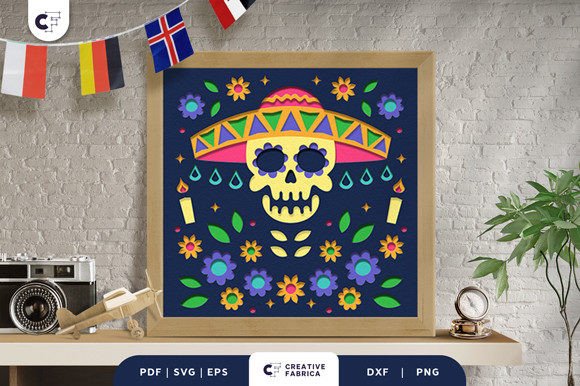
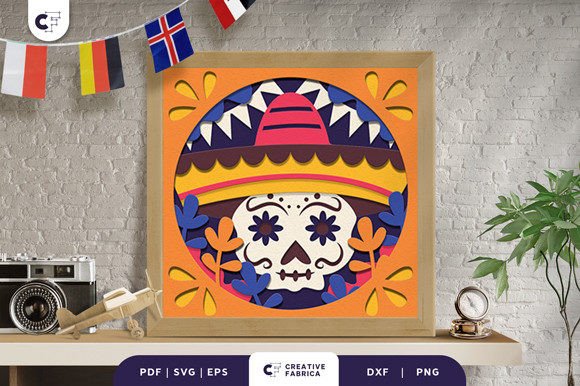
For professionals, hobbyists, and small business owners alike, understanding how to execute this project efficiently is key. The process is not merely about cutting paper; it is about layering depth, managing light, and curating a narrative within a frame. This specific design features a sugar skull adorning a traditional sombrero, adding a distinct cultural touch that grounds the piece in authenticity. Furthermore, it is decorated with colorful leaf arrangements representative of the autumn season, tying the celebration of life to the natural cycles of the earth. Whether you are creating a single heirloom for your home or producing a series of items for a seasonal market, the workflow remains consistent: preparation, execution, and assembly.
Integrating Digital Assets into Your Creative Workflow
The foundation of a successful paper craft project lies in the quality and compatibility of your digital assets. In a professional setting, time is a resource that must be managed carefully. Starting with a well-structured file format ensures that the transition from concept to physical object is seamless. The Sugar Skull Sombrero 3D SVG is typically available in a variety of formats to accommodate different software ecosystems and cutting machines. These include SVG, PDF, EPS, PNG, and DXF. Having access to this range of files means you can integrate the design into your existing workflow regardless of whether you use Adobe Illustrator, CorelDRAW, Inkscape, or direct machine software like Cricut Design Space or Silhouette Studio.
When planning your project, consider the complexity of the design. This particular light box consists of eight distinct layers. In terms of production planning, an eight-layer structure strikes a balance between visual depth and assembly feasibility. It provides enough dimensionality to create a compelling shadow effect when lit, without becoming so complex that assembly becomes prone to error or excessive time consumption. For educators teaching paper engineering or marketers creating visual content, this layer count is ideal for demonstrating the principles of depth and perspective without overwhelming the audience or the creator.
Compatibility extends beyond file types to the hardware used. A cutting machine, such as a Cricut or Silhouette, is essential for achieving the clean, precise lines required for intricate sugar skull details. Manual cutting of eight layers with such fine detail would introduce variability and potential inconsistency, which detracts from the professional finish of the final product. By utilizing automated cutting tools, you ensure that every layer matches perfectly, a critical factor for quality control when producing multiple units or ensuring the structural integrity of the light box.
Material Selection and Preparation Strategies
The choice of materials directly influences the aesthetic outcome and durability of the Sugar Skull 3D Light Box Paper Cut. In any production workflow, standardizing materials helps maintain consistency. For this project, high-quality cardstock is non-negotiable. Specifically, Encore Cardstock 80 lb cover (216 gsm) is recommended. This weight is substantial enough to hold its shape when suspended in a frame yet thin enough to allow light to permeate through the layers effectively. Using lighter weight paper may result in warping or translucency issues where the background shows through unintentionally, while heavier stock might block too much light or prove difficult to cut cleanly.
Preparation also involves considering the environment in which the piece will be displayed. Since the design incorporates autumn leaf arrangements, the color palette should reflect warm, earthy tones that complement the traditional bright colors of the sugar skull. When sourcing paper, it is important to note that images shown in digital previews are for reference only. The actual final product color may slightly vary due to lighting sources and the specific batch of paper color. A prudent workflow includes ordering sample swatches or testing a single layer before committing to a full production run. This step mitigates the risk of color mismatch and ensures the final assembly meets your visual expectations.
Organization is another critical component of the preparation phase. With eight layers to manage, keeping them sorted and labeled is vital to avoid assembly errors. A simple system involving numbered envelopes or a staged workspace where layers are laid out in order can save significant time during the construction phase. For entrepreneurs managing inventory, this organizational habit scales well, allowing for efficient batching of multiple projects without cross-contamination of parts.
Assembly Techniques for Depth and Illumination
The transition from cut pieces to a finished artwork relies heavily on the assembly technique. The defining characteristic of a 3D light box is the space between layers, which creates the shadow and depth effects. To achieve this, 3D adhesive such as foam double-sided tape is required. Unlike standard glue, foam tape provides the necessary standoff distance. When applying adhesive, consistency is key. Placing adhesive strips at regular intervals along the edges of each layer ensures that the paper remains taut and does not sag over time, which could distort the image or cause the layers to touch.
Lighting is the element that brings the Sugar Skull 3D Light Box Paper Cut to life. While the project can be displayed as a static shadow box, integrating LED lights significantly enhances the result. LEDs are preferred for their low heat output and energy efficiency, making them safe for enclosed paper crafts. When installing lighting, consider the direction and diffusion. Backlighting usually yields the most dramatic effect, highlighting the silhouette of the sombrero and the intricate patterns of the skull. For a more subtle approach, side lighting can accentuate the texture of the paper and the depth of the cuts. If you are designing this for a client or a specific space, offering options for battery-operated versus plug-in LED strips adds value and flexibility to the final product.
Framing is the final structural component. An optional decorative frame not only protects the delicate paper layers but also provides a finished look suitable for display. When selecting a frame, ensure it has sufficient depth to accommodate the eight layers plus the lighting elements. A shallow frame may compress the layers, negating the 3D effect. For those selling these items, offering a curated selection of frames that match the autumnal and cultural themes of the design can increase the perceived value and appeal to buyers looking for ready-to-display decor.
Practical Applications and Long-Term Use
Understanding where this project fits into a broader context helps maximize its utility. For educators, building a Sugar Skull 3D Light Box Paper Cut serves as an excellent interdisciplinary lesson combining history, culture, art, and engineering. It allows students to explore the meaning behind Dia De Los Muertos while learning practical skills in digital design and manual assembly. For marketers and bloggers, creating time-lapse videos of the assembly process or showcasing the final illuminated piece can generate engaging content that resonates with audiences interested in DIY culture and seasonal decor.
From a business perspective, this project offers scalability. Once the digital file is purchased and the workflow is established, the marginal cost of producing additional units is relatively low, primarily consisting of paper and adhesive. This makes it a viable product line for small business owners looking to capitalize on seasonal trends without heavy upfront investment in machinery, assuming they already possess a cutting device. The availability of the design in multiple formats (SVG, PDF, EPS, PNG, DXF) ensures that it can be adapted for various marketing materials, from social media graphics to printed catalogs, further extending its reach.
Long-term use and preservation are also important considerations. Paper is susceptible to environmental factors such as humidity and direct sunlight, which can cause fading or degradation. Advising clients or end-users to display the light box away from direct sun exposure and in a climate-controlled environment will prolong its lifespan. Additionally, using archival-quality materials, like the recommended 216 gsm cardstock, contributes to the longevity of the piece. For those intending to gift these items as heirlooms, including a care guide with the product demonstrates professionalism and care for the recipient's experience.
In conclusion, the creation of a Sugar Skull 3D Light Box Paper Cut is a harmonious blend of cultural reverence and technical skill. It requires thoughtful planning regarding file formats, material selection, and assembly methods. By adhering to a structured workflow that emphasizes precision and quality, creators can produce meaningful artworks that honor the spirit of Dia De Los Muertos. Whether used for personal reflection, educational purposes, or commercial enterprise, this project exemplifies how traditional themes can be reimagined through modern crafting techniques. For those ready to begin, ensuring you have the right tools—specifically a reliable cutting machine and high-quality cardstock—is the first step toward a successful outcome. You can find suitable materials by visiting a 12×12 Cardstock Shop to source the recommended Encore Cardstock, ensuring your project starts with the best possible foundation.